Fáilte Ireland accused of lack of commitment to coastal tourism
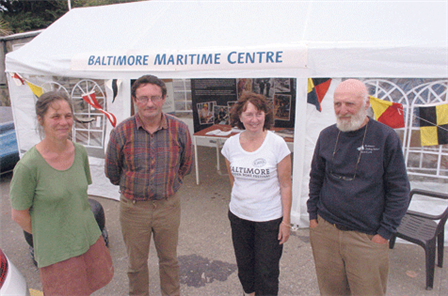
Diane and
Dermot Kennedy, with Mary Jordan and Liam Hegarty who are involved, along with
other members of the community, in putting together a proposal in the hopes of
taking over the former Glenans building in Baltimore, and opening it as the
Baltimore
THE proposal by Fáilte Ireland to sell the old Glénans Sail
Training School building in Baltimore has prompted locals to claim the tourism
organisation is not fully committed to coastal tourism.
In July this year Fáilte Ireland declined to lease the building
to Baltimore Marine Centre, demanding vacant possession of Baltimore Railway
Station, and put the building and sailing school facilities for sale on the
international market.
The Glénans building, formerly the old Railway Station, was
built in the 19th century and was home to Ireland’s oldest international
sailing school. It has been used as a sailing school in the village for almost
half a century and has proved to be a substantial success, training more than
26,000 people in its 44 years of operation. Locals believe the building could be a focal point along the
Wild Atlantic Way and that Fáilte Ireland has not stayed true to its commitment
to coastal tourism.
The Old Station House has the potential to provide maritime
education and training, as well as sailing courses, according to locals.
‘The Wild Atlantic Way is a great policy and this is in direct
conflict with that policy,’ said Mary Jordan, Chairperson of the local Maritime
Heritage Group, this week. She believes the building should not go out of the community’s
control. ‘It is very strange that Fáilte Ireland is spending €10m to promote
the Wild Atlantic Way and that it would close something that is such a
sustainable tourist attraction.’ On September 7th 2013, the Conseil D’Administration (Les Glénans
Board of Directors) voted ‘with great sadness’ to close their two Irish bases.
Poor financial performance was stated as the main reason behind the closures of
both Collanmore and Baltimore sailing schools. As a direct result of the closure, the
Baltimore Maritime Centre
was formed, and created the Glenua company. The idea was to create a
state-of-the-art training and education centre, all the while following the
non-profit, volunteer philosophy of Les Glénans, which had left a fleet of keel
boats for the succeeding members of the organisation. Along with sailing training, the education centre includes a
boat-building school, a maritime archaeology school and also a database of
maritime heritage, incorporating material from the National Heritage Council,
University College Cork, the Traditional Boats of Ireland project and local
digitised material.
‘The main economic activity in Baltimore is to do with the sea
and sailing and this is an opportunity with the new organisation, the Baltimore
Maritime Centre, to build on that and to make it a centre of education all year
round, not just in the summer,’ said Mary.
The link between Les Glénans and Baltimore came about in 1967 and following a trade mission to Paris in 1969, Bord Fáilte decided to support the establishment of a sail training initiative with the French sail training organisation. Since that time the site has been developed to include student accommodation, workshops, boat storage areas and leisure facilities.

West Cork's trusted source of news, views and sport
http://www.southernstar.ie/

 Coastal Boating (Reg. in Ireland No. 443222) is a division of Knowledge Clinic Ltd.